

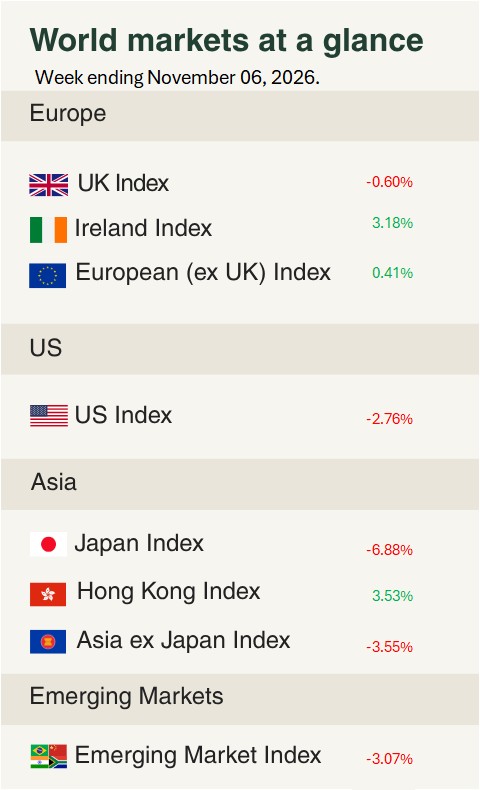
It was an eventful week for global equity markets as markets processed the outcome of the U.S. midterm elections, concerns over artificial intelligence (AI) valuations, and the outlook for interest rates. Earlier in the week global equities had welcomed the Democrats’ sweeping victory, which secured control of both chambers of Congress. Dow Jones Industrial Average surged 3.0%, while the S&P 500 and Nasdaq gained 1.6% and 1.4%, respectively. The rally was broad-based, with equities across Asia and emerging markets also responding favourably. Markets appeared to welcome the prospect of a divided Washington, which could moderate the pace and scope of policy changes under President Trump and provide a more predictable backdrop for equities.
However, the optimism proved short-lived, with equities reversing course sharply on Thursday. Such volatility is not unusual following a significant political shift, technology stocks bore the brunt of the declines with concerns that a Democrat-controlled Congress could introduce tighter AI regulation and roadblocks for data centres adding to existing questions over the substantial investment being committed to AI infrastructure. As is often the case amid short-term market fluctuations, technology stocks recovered some ground on Friday, helping to moderate losses as markets started to look beyond the initial uncertainty.
History offers some encouragement. Periods in which the incumbent president’s party has lost control of at least one chamber of Congress at the midterm elections have typically been followed by positive returns for the S&P 500 over the subsequent 12 months. While history offers no guarantee of future performance, Democratic control of Congress may provide a more supportive backdrop for markets by reducing the likelihood of significant policy shifts and increasing policy predictability.
Friday’s U.S. employment report provided further evidence of economic resilience, with 165,000 jobs added in October, comfortably exceeding expectations, while unemployment edged down to 4.1%. However, the strength of the labour market could complicate the Federal Reserve’s efforts to contain inflation, keeping the prospect of further interest rate increases firmly in focus.