

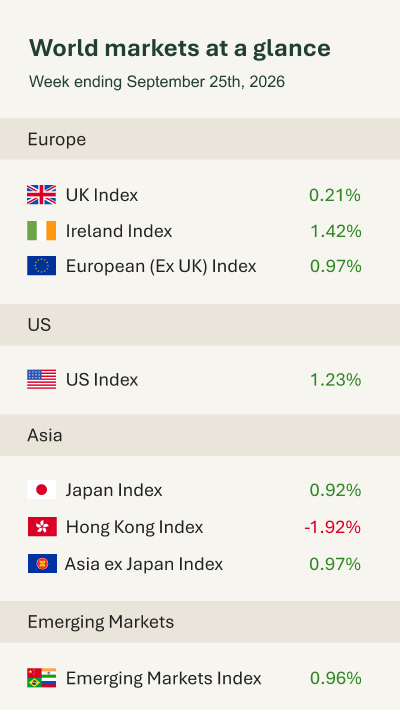
Much of the focus this week remained on geopolitics. Oil prices see-sawed throughout the week, while government bond yields moved higher across the UK, U.S. and Europe as stronger-than-expected economic data added to expectations that central banks may need to raise interest rates further.
Despite some sizeable moves beneath the surface, equity markets were relatively positive, with weekly moves modest given the volatility across oil and bond markets.
Oil prices began the week below $100 per barrel, having fallen by around 9% amid signs of potential de-escalation in the Middle East. However, prices moved back above $100 during the middle of the week as uncertainty surrounding the conflict and global energy supply remained elevated.
Meanwhile, U.S. 10-year Treasury yields climbed above 5%, reaching their highest level since 2007, as stronger economic data reinforced expectations that the Federal Reserve may need to raise interest rates again.
One of the main catalysts was the latest Purchasing Managers’ Index, or PMI, data. The PMI is a closely watched indicator of economic activity, with a reading above 50 signalling expansion and a reading below 50 indicating contraction.
The U.S. Composite PMI rose to 58.4 in September, marking the strongest expansion in business activity since July 2021. Growth was led by the services sector, while the Manufacturing PMI increased to 57.0 from 53.9 in August. The data suggest the U.S. economy continues to expand at a healthy pace but also pointed to rising cost pressures. This combination of resilient growth and persistent inflation strengthened expectations that the Federal Reserve could tighten monetary policy further.
Closer to home, the Eurozone Composite PMI rose to 53.1 in September from 52.0 in August, comfortably ahead of expectations and marking the fastest rate of expansion in more than three years.