

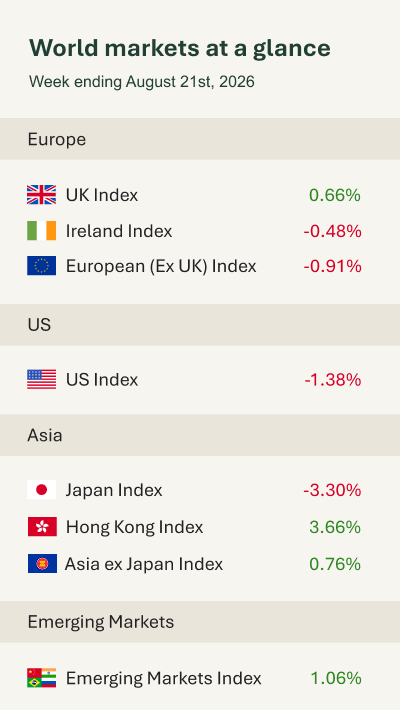
Global financial markets closed the week on a mixed note, with investor attention focused on inflation data from the UK and eurozone, alongside the minutes from the Federal Reserve’s July meeting. Rising bond yields initially weighed on equity markets, particularly technology and semiconductor stocks, as investors reconsidered the outlook for interest rates. Tensions between the US and Iran and higher oil prices added to caution. However, easing bond yields later in the week helped improve sentiment, with Asian equities rebounding from recent weakness.
The dominant theme this week was the sell-off in global bond markets, with long-term government bond yields rising to levels not seen since before the global financial crisis. As bond prices and yields move inversely, higher yields increase borrowing costs across the economy, making it more expensive for governments, businesses and households to borrow, which can weigh on growth and financial markets.
The rise in yields reflects investors demanding greater compensation amid concerns over growing fiscal deficits, persistent inflation risks and higher oil prices. While this has created market volatility, it is not a sign of financial system stress. Sentiment improved after the US Treasury announced plans to increase purchases of longer-dated government debt, helping ease liquidity concerns and showing policymakers have tools to support market functioning if borrowing costs rise too quickly. Government bond markets remain deep and liquid, and higher yields may ultimately attract investors back by offering more attractive returns.
The minutes of the July Federal Open Market Committee meeting highlighted policymakers’ continued concern around upside risks to inflation. While participants generally expected inflation to moderate over the remainder of the year, they acknowledged that the outlook was highly uncertain and that inflation risks were skewed to the upside. Some officials indicated that further tightening could be warranted if inflation failed to decline.