

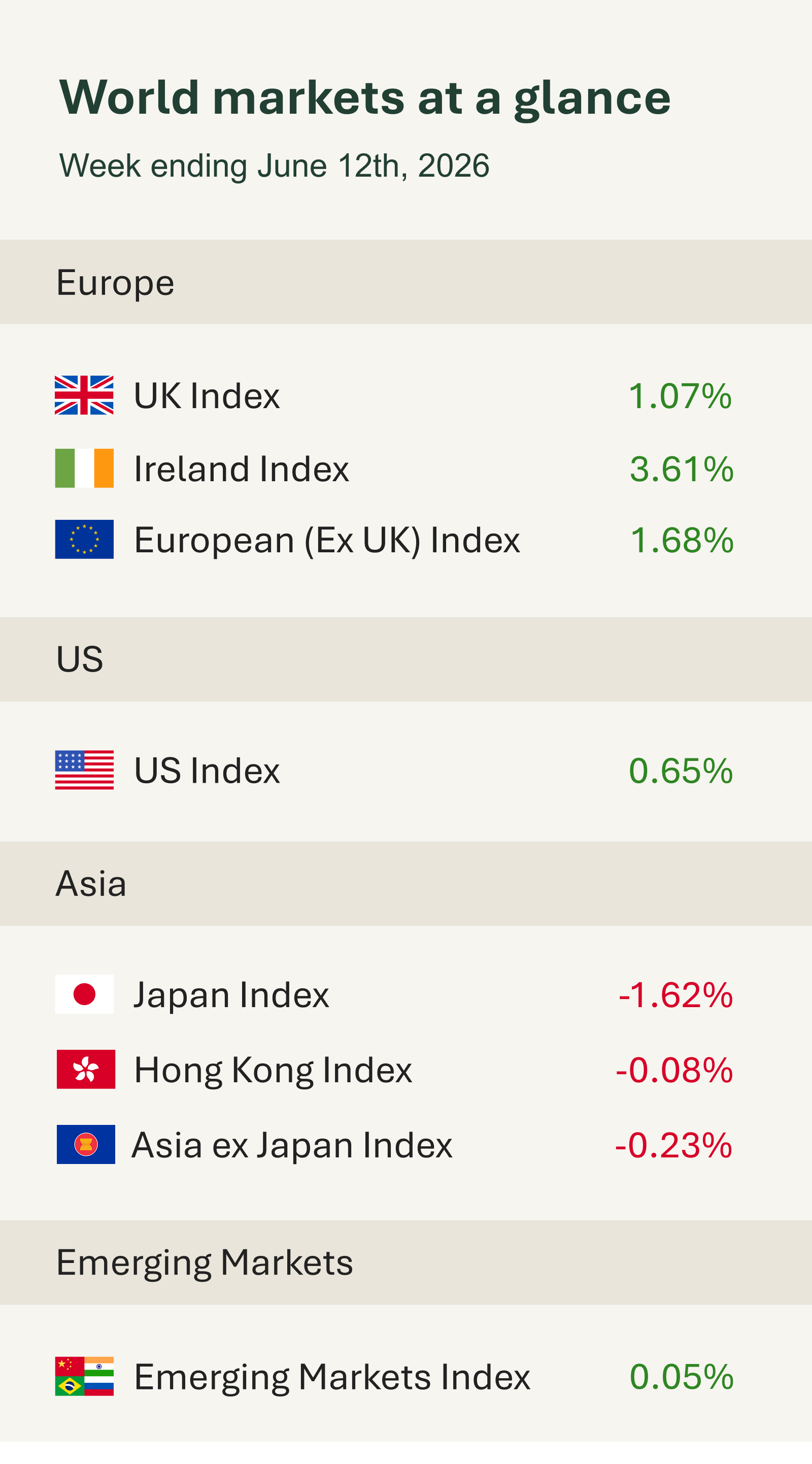
As you can see from the accompanying table, global equities ended a choppy week slightly higher, supported by improving Middle East sentiment and lower energy prices. Performance was weaker across Japan and broader Asia, while gains elsewhere were helped by a gradual broadening beyond mega-cap tech, offsetting ongoing inflation concerns and AI-driven volatility.
The outlook for President Donald Trump ahead of the mid-term elections has become a little more uncertain after US inflation accelerated in May at its fastest annual pace in three years. Consumer prices rose by 4.2% year-on-year, up from 3.8% in April. Trump said he ‘loved’ the inflation figures, arguing that price pressures would ease once the conflict with Iran comes to an end.
There may be some basis for that view, as much of the recent increase appears to have been driven by higher energy costs. However, with the economy remaining a key issue for many American voters, persistently elevated inflation could still influence how much political capital Trump’s administration has after the votes are counted. On a monthly basis, however, the figures were more measured, with headline inflation rising by 0.5%, in line with expectations. While the increase was not especially sharp, it suggests price pressures remain present and may reduce the likelihood of the Federal Reserve cutting interest rates in the near term.
The European Central Bank raised its key interest rates by 0.25% on Thursday, marking its first increase since September 2023. Policymakers emphasised that the outlook remains uncertain, with upside risks to inflation and downside risks to growth. The rate increase signals a continued commitment ensure inflation is under control, even as growth risks linger.
SpaceX dominated market attention this week with its long‑awaited IPO, delivering a record‑breaking debut. The company priced its $75 billion offering at a valuation of $1.77 trillion, the largest ever for a public listing. On its first day of trading, shares surged 28%, pushing the firm’s market value above $2.25 trillion and marking an exceptionally strong entry into the Nasdaq.
Geopolitical tensions between the U.S. and Iran remained a key driver of market sentiment throughout the week. Over the weekend, however, the two sides reached a preliminary peace agreement, providing a notable easing in tensions. Markets reacted positively to the development, with a formal signing expected in Switzerland on Friday.
Market futures are higher, reflecting improved risk sentiment, while oil prices have fallen sharply, Brent crude is down nearly 5% to around $80 per barrel, on expectations of increased Iranian supply and reduced disruption risks.