

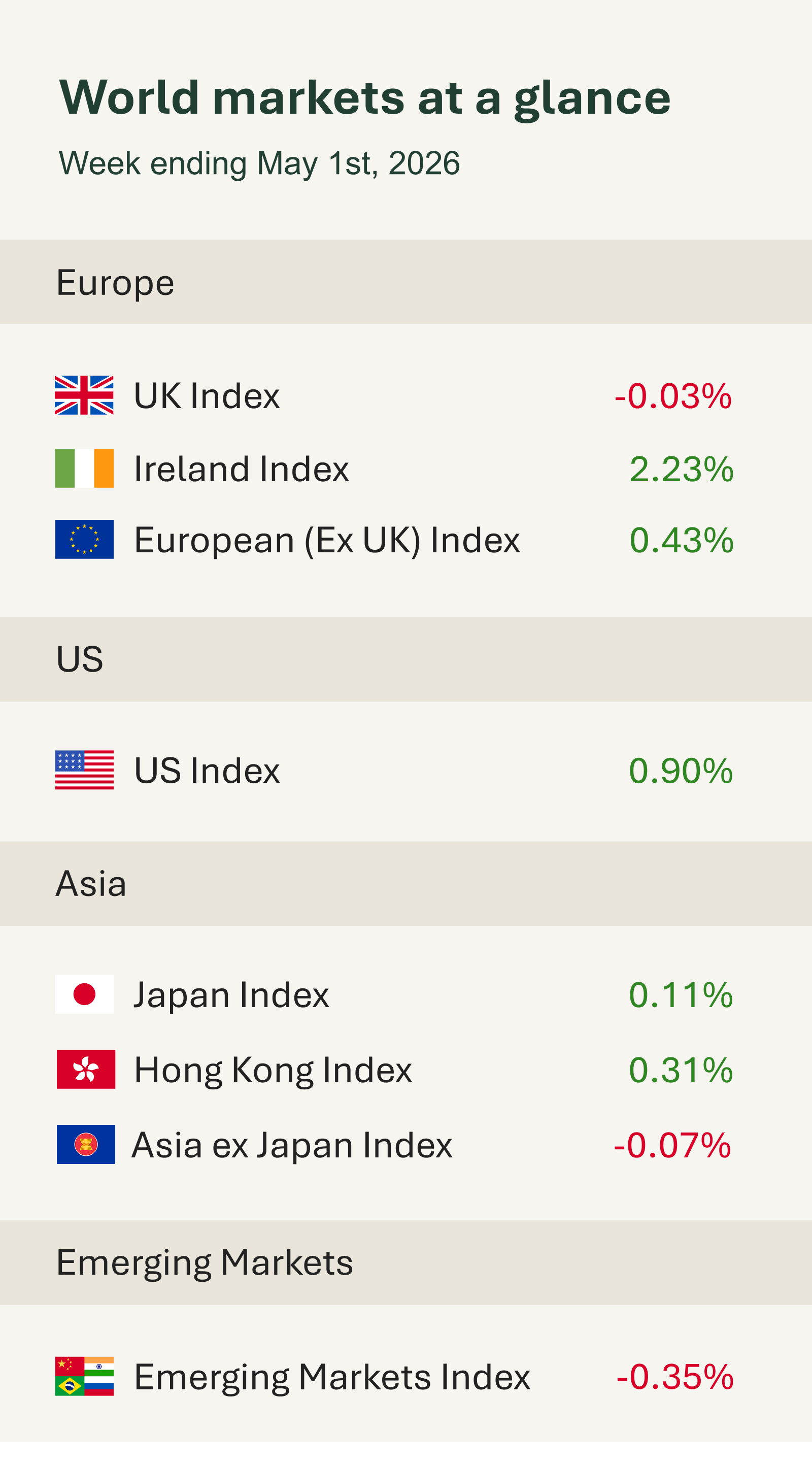
As you can see from the accompanying table. Global equity markets demonstrated resilience against a backdrop of geopolitical uncertainty and shifting monetary policy expectations. Despite a steady flow of headlines related to tensions in the Middle East and oil prices creeping higher, investor sentiment remained supported by solid corporate fundamentals and a broadly constructive earnings season.
In the U.S., the S&P 500 Index continued its upward trajectory, rounding off a particularly strong April up over 7.5% (Total Return GBP) over the month. The scale of recent gains has been driven in large part by earnings, which have generally come in ahead of expectations. This has helped offset concerns that rising input costs, especially in energy, could begin to weigh on margins in the coming months.
Earnings season has started on a very strong footing. With roughly two-thirds of S&P 500 companies having reported, the vast majority are beating expectations, 84% on earnings and 81% on revenues, well above historical averages. Strong earnings reports from leading U.S. technology firms reinforced optimism around the sector, even as market reactions remained mixed. Apple’s better‑than‑expected results, supported by strong consumer uptake of the iPhone 17, underscored the continued resilience of high‑quality demand.
At the same time, the major cloud providers, Amazon, Alphabet, and Microsoft delivered results that demonstrated how sustained investment in cloud infrastructure and artificial intelligence is translating into tangible returns, boosting investor confidence in their long‑term strategies. While Meta Platforms prompted a more measured response after signalling higher near‑term spending, the broader earnings backdrop highlighted a constructive outlook for growth leaders successfully balancing innovation with profitability.
Monetary policy developments also shaped market expectations. In the U.S., the Federal Open Market Committee left interest rates unchanged in the range of 3.50-3.75%, as anticipated, but a higher-than-usual level of disagreement among policymakers drew attention. Diverging views on the appropriate policy path were interpreted as signalling a more cautious approach, with markets reassessing the likelihood and timing of future rate cuts.
In Europe, equity markets were comparatively subdued. The European Central Bank maintained its key deposit rate at 2%, while acknowledging that risks to the economic outlook have increased, particularly due to energy market uncertainty and geopolitical developments. Policymakers also indicated that further tightening had been discussed, reflecting ongoing concerns around inflation.