

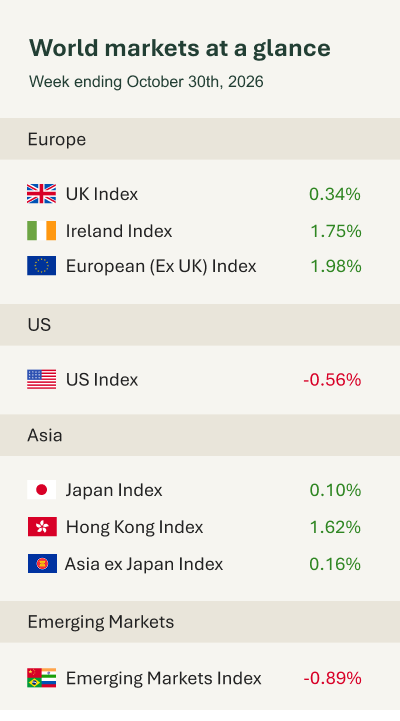
As shown in the accompanying table, global equity markets posted a more positive performance over the week, with Europe and the UK proving relatively resilient despite weaker returns from the U.S. and emerging markets. Regional sentiment was supported by strong earnings from energy companies, while results across other sectors were more mixed. Investors remained increasingly focused on companies’ forward guidance and longer-term growth prospects, with results that merely met expectations receiving a subdued reaction. Meanwhile, renewed volatility among large U.S. technology stocks weighed on broader market sentiment.
In the UK, Chancellor John Healey delivered his Autumn Budget on Wednesday 28th October. The announcement proved relatively uneventful, with financial markets showing little reaction. For further analysis of the Budget and its implications for investors and financial planning, please visit the my wealth private news page.
Perhaps of greater interest was the Federal Reserve’s decision to leave interest rates unchanged at 3.75%–4.00%, following September’s 25-basis-point increase. The decision was not unanimous, with two of the twelve voting members favouring another rise. Fed Chair Kevin Warsh acknowledged that inflation remains elevated but highlighted economic growth remains strong, supported by consumer spending and business investment. Policymakers indicated that further data would be needed before deciding whether additional tightening was necessary.
The latest figures reinforced this cautious approach. September’s core Personal Consumption Expenditures (PCE) inflation measure, the Fed’s preferred gauge of underlying price pressures, rose 0.3% month-on-month, while the annual rate edged up to 3.1% from 3.0%. Meanwhile, the U.S. economy expanded by an annualised 3.4% in the third quarter, exceeding expectations. Strong consumer spending and investment in technology-related equipment helped support growth.