

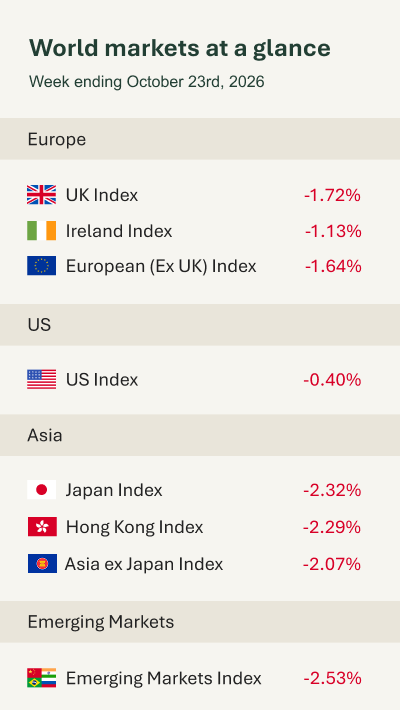
Global markets finished the week under pressure as investors reconsidered the cost of artificial intelligence (AI) investment alongside higher energy prices and geopolitical risk. Renewed Houthi attacks in Saudi Arabia heightened fears of supply disruption, sending Brent crude above $116 a barrel by Friday’s close.
In the U.S., the sell-off was concentrated in technology, where investors are asking tougher questions about the scale of spending on data centres and semiconductors, and when it will generate returns. This is not the same as a collapse in demand for AI: many leading companies remain profitable and are reporting strong demand, although expectations embedded in share prices have been high. Other areas, including smaller companies and value stocks, performed better over the week. U.S. economic data also offered some reassurance. Initial jobless claims fell by 6,000 to 194,000 in the week ending 17th October, while continuing claims rose by 25,000. Layoffs therefore appear contained, although finding new work may be taking longer. U.S. business activity remained strong, even as surveys signalled rising selling prices, leaving the Fed alert to inflation risks.
In the UK, shares declined despite the market’s relatively low exposure to technology. September retail sales volumes fell 0.4%, partly because warm weather disrupted autumn clothing purchases, while higher fuel costs weighed on confidence. Despite some mixed signals, the overall picture was encouraging, with third-quarter sales up 0.7% and October’s services PMI at an eight-month high, supported by improving orders. The strength in business activity has increased the likelihood of a more cautious Bank of England stance.
European equities also weakened as higher energy prices and political unrest in France weighed on sentiment and government bonds. The eurozone composite PMI slowed to 51.9 in October from 53.1 in September, indicating continued, but more modest, growth.