

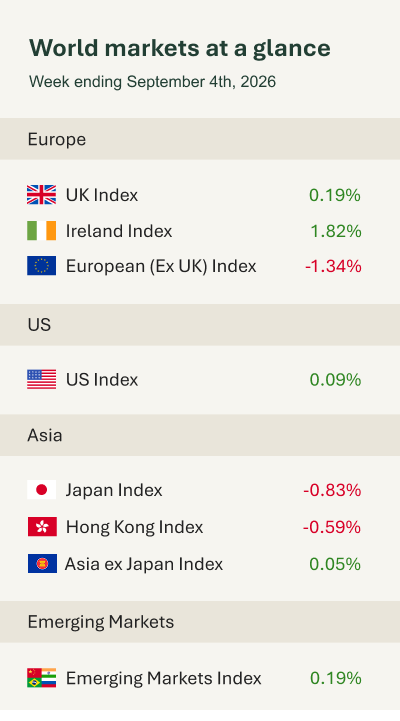
As can be seen from the accompanying table, markets ended the week mixed, with a stronger-than-expected US jobs report pushing Treasury yields higher and reducing expectations of a September rate cut, while renewed US-Iran tensions kept oil prices elevated and added to market uncertainty.
US markets were little changed by the end of the week, in the US, job gains accelerated in August, with payrolls expanding by 162,000 – the strongest monthly increase since April. July’s figure was also revised upwards, showing an additional 21,000 jobs were created. Meanwhile, the unemployment rate remained steady at 4.1%, unchanged from the previous month. The latest data will present something of a dilemma for the Federal Reserve, given that inflation remains elevated at 3.4% and the labour market continues to show resilience. The combination of persistent inflation and strong employment could make it more difficult for the Fed to justify further interest-rate cuts. Following the release, short-dated US government bonds gained, while the dollar was broadly flat against the pound.
Over in Japan, household spending declined by 3.6% year on year in July, marking the eighth consecutive month of lacklustre consumption. The data showed consumers cutting back on food and transport, while continuing to spend on areas such as entertainment and household goods. The figures will be closely watched by the Bank of Japan when policymakers meet later this month, as they weigh the case for further monetary tightening. Stronger wage growth following this spring’s Shunto wage negotiations, together with rising inflation in recent months, could support further interest-rate increases. However, the continued weakness in household spending suggests consumers are already feeling the effects of higher prices, meaning the Bank will need to balance the need to contain inflation against the risk that tighter monetary policy further raises borrowing costs and weighs on consumption.