

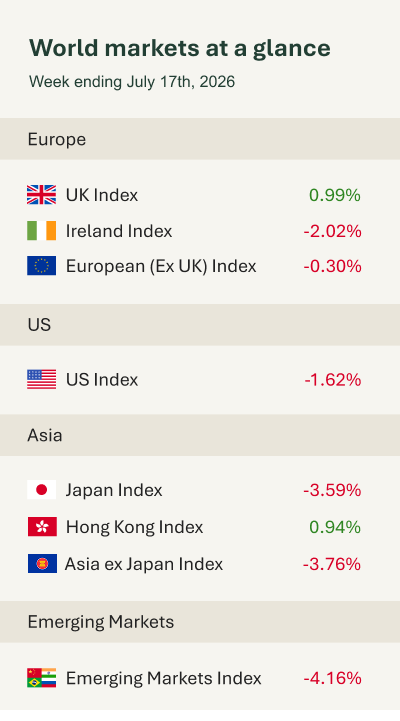
It was an eventful week for markets, with investors digesting a busy calendar of second-quarter earnings, economic data and rising geopolitical tensions. While technology companies delivered another round of impressive earnings, tech stocks nevertheless pulled back, weighing on US and Asian markets. Meanwhile, the UK’s FTSE 100, with relatively limited technology exposure, rose 0.98%.
Geopolitical developments remained a key focus for investors as the United States intensified its military campaign against Iran. President Donald Trump stated that airstrikes would continue until Tehran ceases attacks on commercial shipping. Meanwhile, Iran’s closure of the Strait of Hormuz, a strategically important route that typically handles around a fifth of global oil shipments, has raised concerns about potential disruptions to energy markets.
Brent crude oil prices remained elevated, with futures settling at $88.10 per barrel on Friday. Prices, remain below the peaks reached during the earlier stages of the conflict, suggesting that markets have not yet priced in a prolonged supply disruption.
However, while uncertainty remains, the situation is highly dynamic, and (as recent history has shown) diplomatic breakthroughs or ceasefire agreements can emerge unexpectedly. The outlook could improve rapidly should tensions begin to ease.
Despite the uncertain backdrop, the second-quarter earnings season got off to an impressive start, with several of the largest US banks comfortably surpassing expectations.
JPMorgan Chase reported the largest quarterly profit ever recorded by a US bank, benefiting from strong equity trading revenues alongside gains from its Visa shareholding. Goldman Sachs also delivered record results as investment banking revenues surged amid a recovery in dealmaking activity and continued demand for AI-related investment. Collectively, the results suggest that activity across financial markets remains healthy despite elevated interest rates and heightened geopolitical uncertainty.