

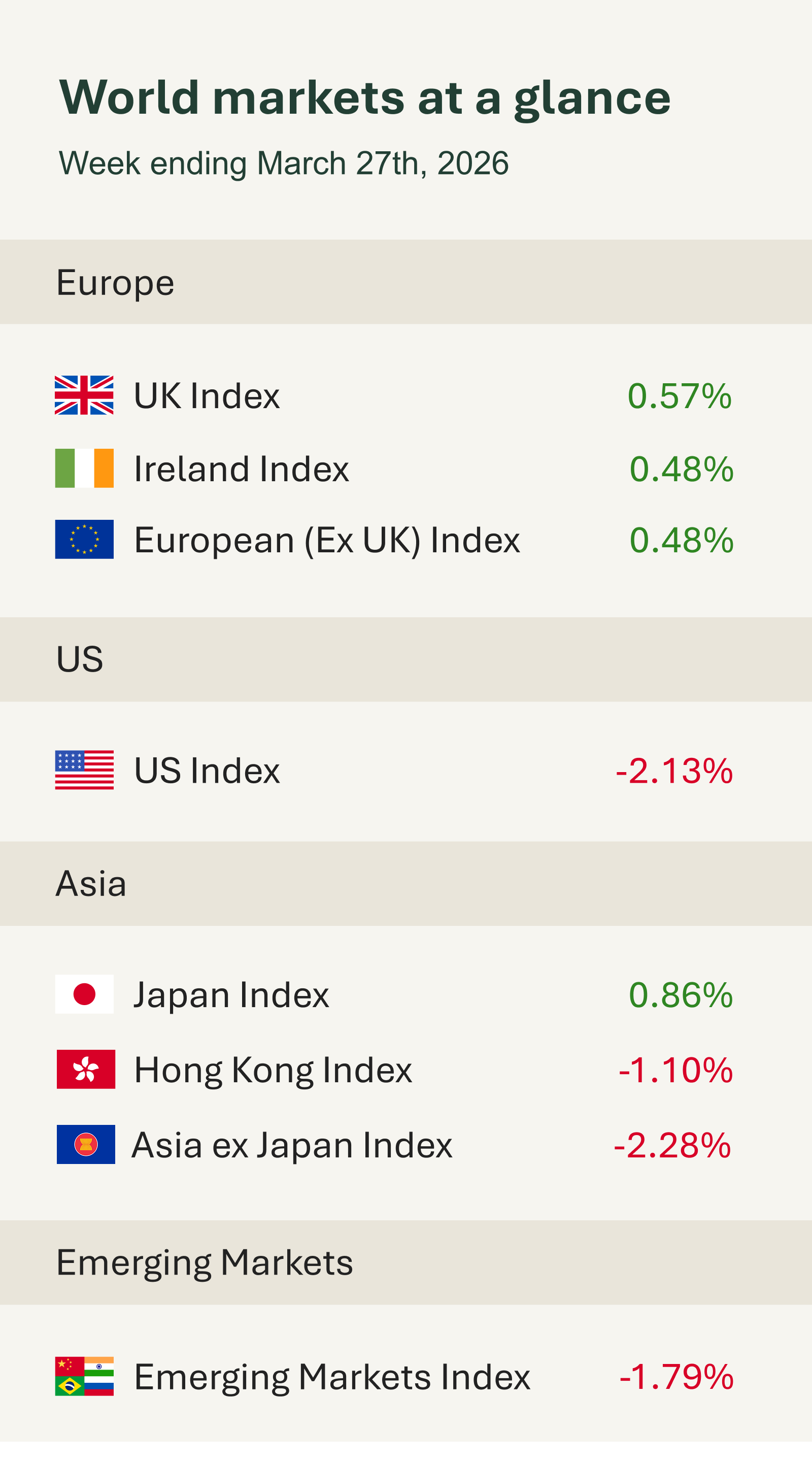
As you can see from the accompanying table it was more of a mixed week performance wise for global financial markets. Geopolitics and energy markets remained the primary drivers of financial markets over the past week, with the ongoing conflict involving Iran continuing to shape investor sentiment. Elevated oil and gas prices, alongside persistent uncertainty around supply disruptions, have increased concerns that the current situation could evolve into a more sustained inflationary shock, with implications for both economic growth and monetary policy.
Markets began the week on a more positive footing, supported by reports of a potential U.S.-led ceasefire on Iranian energy infrastructure and indications of renewed diplomatic engagement. This led to a temporary easing in oil prices and a rebound in both equities and bonds. However, optimism faded as the week progressed, with subsequent headlines suggesting that the U.S., Israel, and Iran remain far apart on the terms of any agreement. At the end of the week, Brent crude continued its climb over $110 per barrel. This came despite President Donald Trump’s announcement that he would extend his deadline for Iran to reach a deal by 10 days—pausing his threatened attacks on Iranian energy facilities until 6 April. Even with this temporary de-escalation, markets remained cautious.
In the US, equity markets ended a headline-driven week mixed. With a relatively light economic calendar, investor focus remained firmly on geopolitical developments and energy price movements.
European markets were somewhat more resilient, although gains were modest. The STOXX Europe 600 Index rose 0.35% in local currency terms, while the UK’s FTSE 100 Index outperformed slightly, advancing 0.49%, as negative drivers were offset by stronger‑than‑expected consumer data and energy‑sector support.
Economic data was thin on the ground. Reports demonstrated a softening in US consumer sentiment, reflecting growing caution among households. The University of Michigan’s Index of Consumer Sentiment declined to 53.3 in March from 56.6 in February, with notable weakness in short-term expectations and personal financial outlooks.